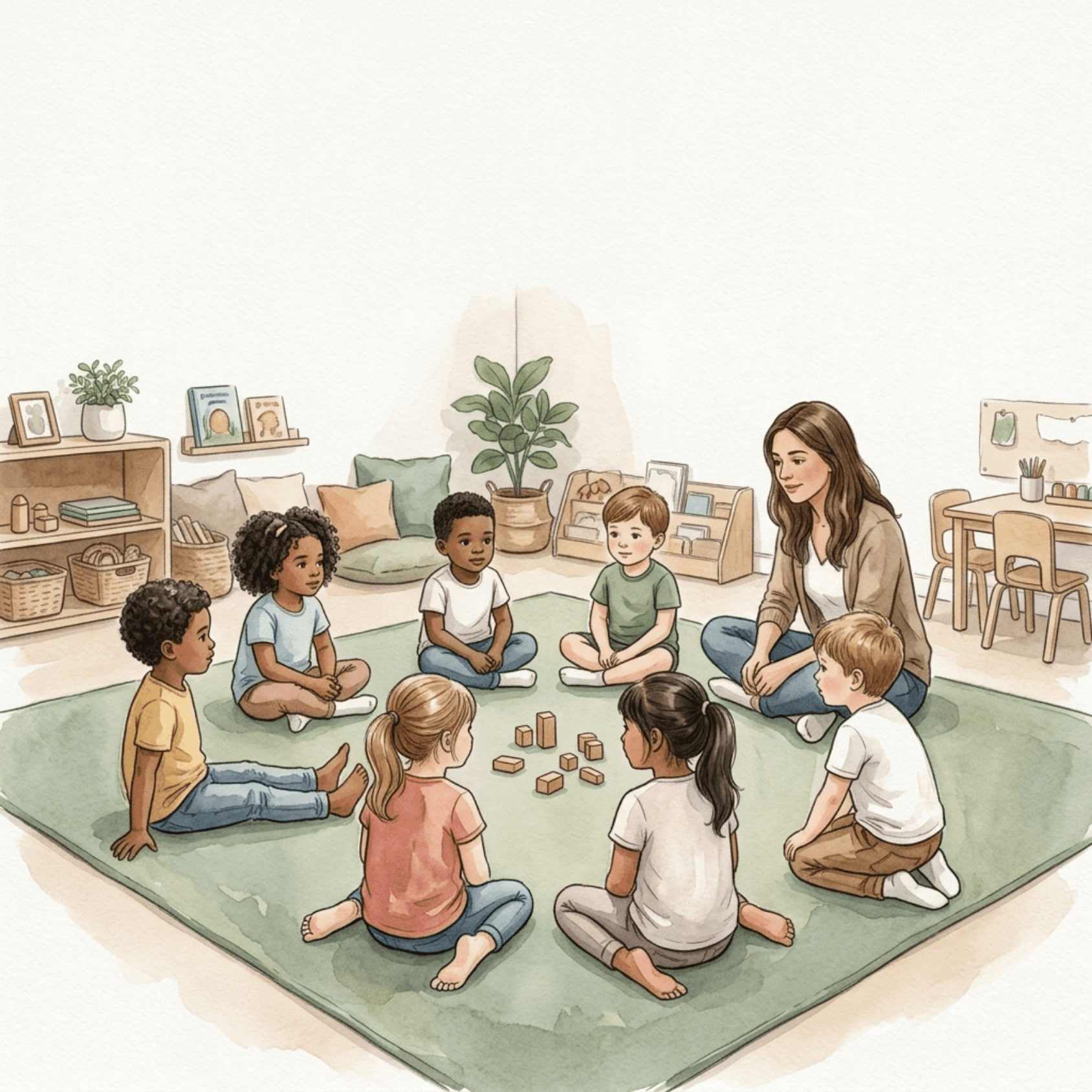
Sometimes you notice the same little things over and over.
A child who rests their whole body against the table while they draw. A child who always seems to sit in the same position on the floor. A child who needs their hands to get back up after group time. Another who avoids climbing, tires quickly on a walk, or seems to find cross body movements much harder than everyone around them.
None of these observations automatically mean there is something wrong.
But as an Exercise Physiologist, they make me curious.
I want to know how much physical effort everyday participation is taking for that child. I want to look at their strength, balance, coordination, postural endurance, movement variety and the way they organise their body when a task becomes harder.
1. The child who constantly leans on the table
Sometimes a child seems to melt into the furniture.
They rest their head in one hand, lean their chest against the table, wrap their legs around the chair or prop themselves against whatever is nearby.
It can look like poor attention or poor sitting habits. Sometimes, though, maintaining an upright position is simply requiring more effort than we realise.
This is where I start thinking about postural endurance. Can the child keep their trunk and shoulders organised while their hands are busy? Or does the physical work of holding themselves upright begin competing with the learning task?
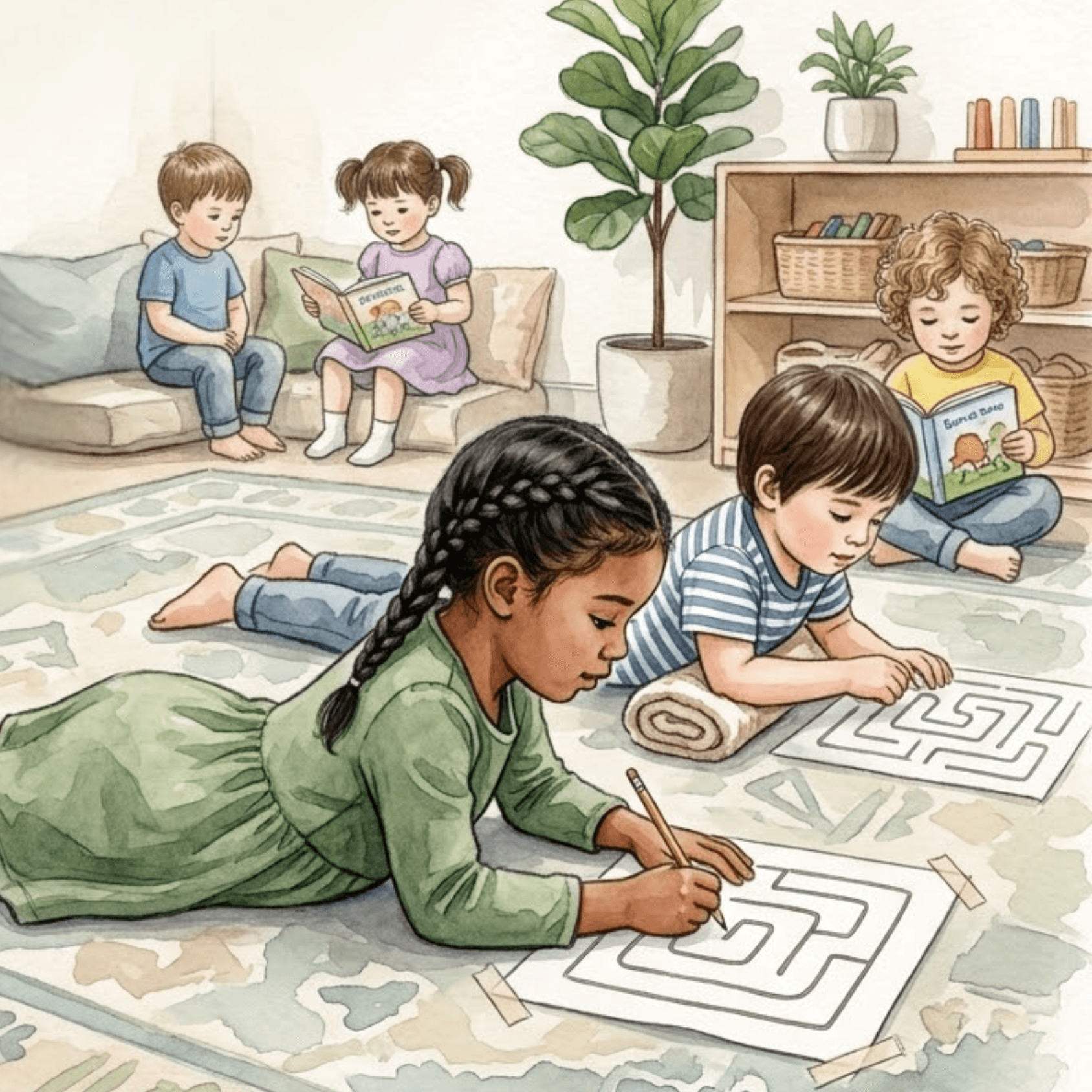
Prone drawing activities can give the shoulders, neck and trunk another opportunity to work while the child is focused on a meaningful task.
Try a tummy time maze
Put a maze, tracing page or drawing activity on the floor and let children work while lying on their tummy and propping through their forearms.
A child who tires quickly can use a rolled towel under the chest, a thicker marker or a shorter activity. The aim is not to force children to stay there. It is to gradually give the upper body more opportunities to work.
2. The child who frequently W sits
W sitting is one of those postures that creates a lot of strong opinions.
I do not think educators need to panic every time a child puts their legs into a W position, and current research does not support the idea that W sitting by itself automatically damages a typically developing child's hips.
What interests me more is the child who seems to rely on this position again and again and uses very little variety in their floor sitting.
A W position creates a wide base of support. So rather than repeatedly saying "fix your legs", I want to look at the child's broader movement picture.
I would be curious about things such as:
- How easily they rotate through their trunk.
- Whether they comfortably cross the middle of their body.
- How they crawl and move in four point kneeling.
- How easily they transition between different floor positions.
- Whether they can shift their weight without losing balance.
- How much variety we see in the positions they choose during play.
Primitive reflex activity, including STNR, may also be one part of a broader clinical assessment when a child has ongoing motor difficulties. However, we do not have evidence showing that a retained STNR directly causes W sitting.
That distinction matters.
We can be curious about the development underneath the posture without making claims that the evidence cannot support.
3. The child who finds getting up from the floor hard
Here is one of the easiest observations you can make in a classroom.
At the end of group time, instead of immediately saying "everyone up", ask the children to see whether they can stand from the rug without using their hands.
Then watch.
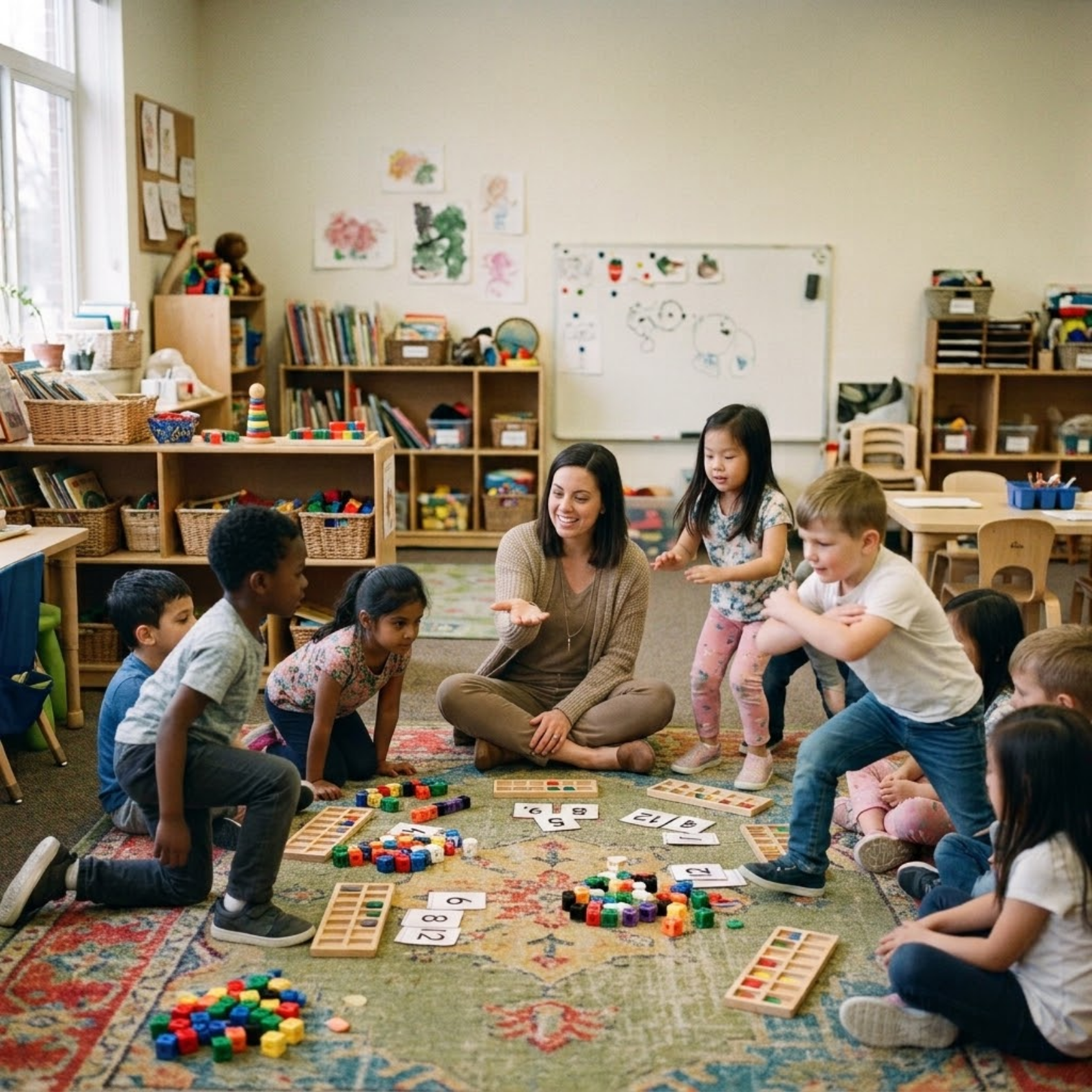
Getting from floor to standing brings together strength, balance, mobility, weight shifting and motor planning.
Some children will move smoothly through kneeling or half kneeling. Some will rock backwards and forwards. Some will put both hands on the floor. Others will push on their thighs, grab nearby furniture or use a completely different strategy.
None of those strategies should become a public test of who can and cannot do it.
I simply want educators to notice how much work the transition appears to require.
4. The child who finds cross body movement difficult
When children move one arm toward the opposite side of the body, there is more happening than simply "crossing the midline".
They are coordinating both sides of the body, stabilising the trunk, shifting weight and organising a movement pattern that requires different body parts to do different jobs.
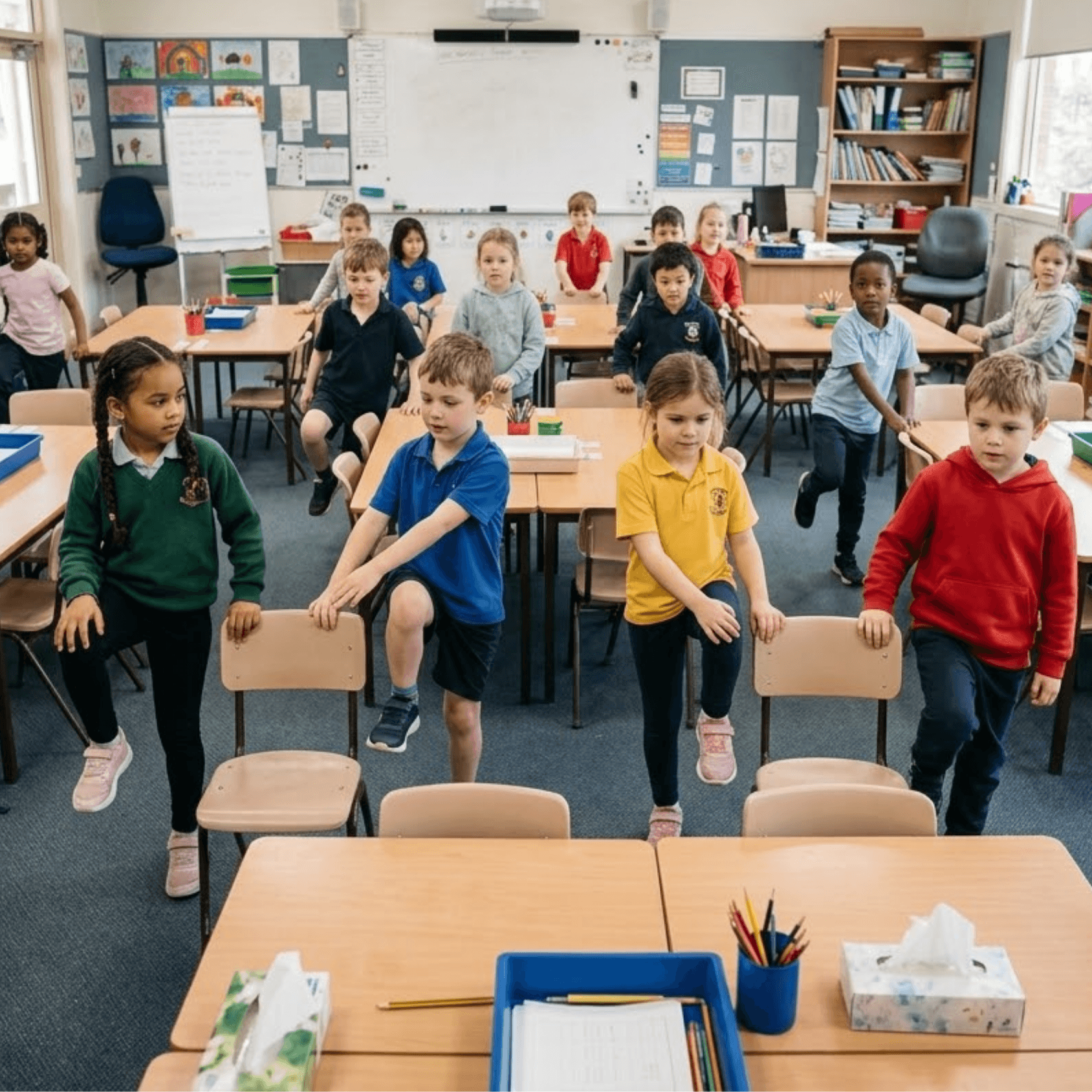
Try Cross Crawl Power March
Stand behind classroom chairs and slowly bring the right hand toward the left knee, then the left hand toward the right knee.
A child who finds the pattern difficult can begin with same side hand to knee. Another child can hold the back of the chair for stability while alternating knee lifts.
The goal is not speed. Start with enough control for the movement pattern to make sense.
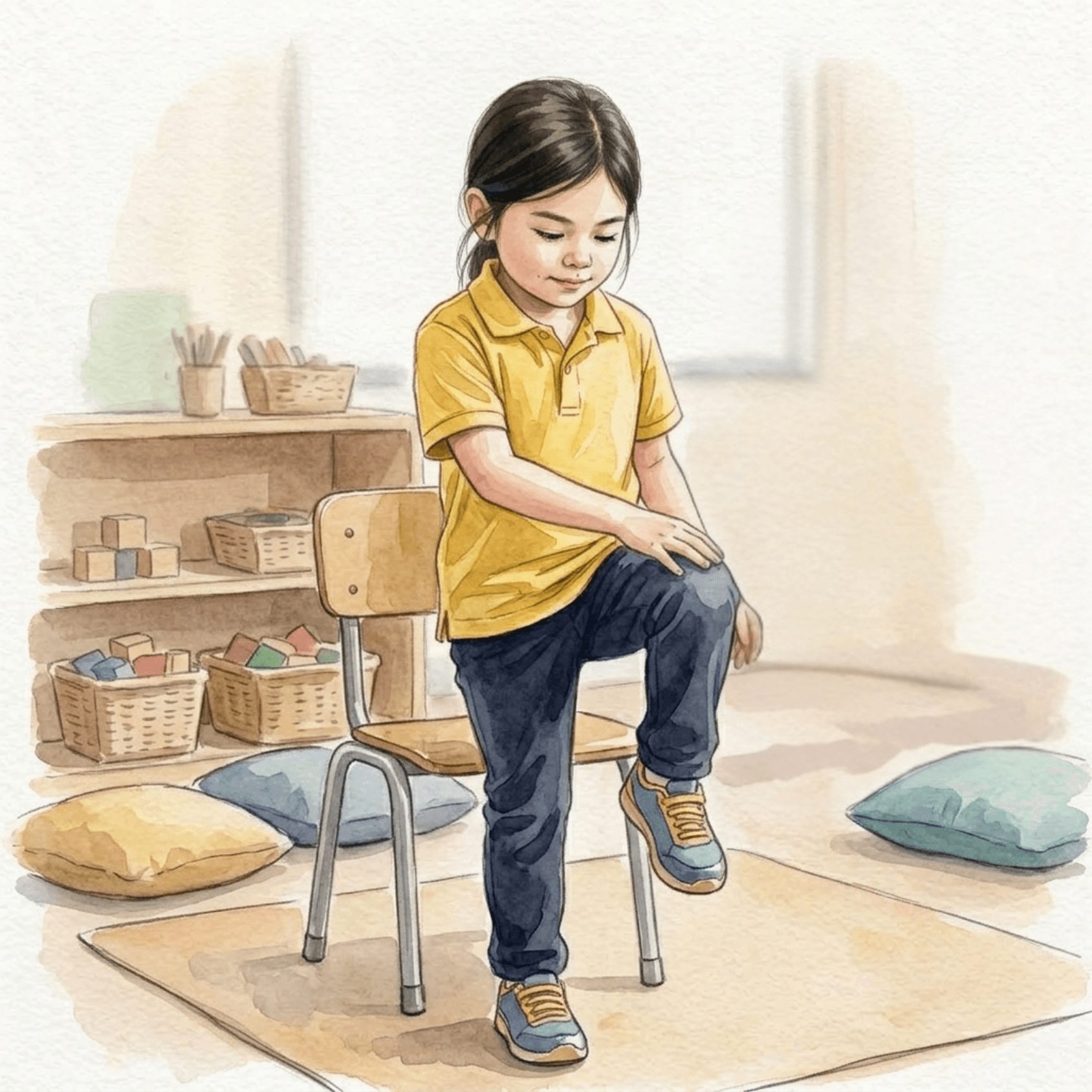
A chair can give a child enough stability to practise the lower limb movement without balance becoming the main challenge.
5. The child who struggles with position and direction
Spatial awareness is not only about avoiding other children in the playground.
Children are constantly learning where their body is in relation to other people, objects and eventually marks on a page.
Think about letters such as b, d, p and q. The basic visual components are similar, but their position and orientation change. A child needs to notice left, right, above, below and how one part sits in relation to another.
Movement activities will not magically fix letter reversals, but they can give children more experiences with the broader concepts of position, direction and reaching accurately through space.
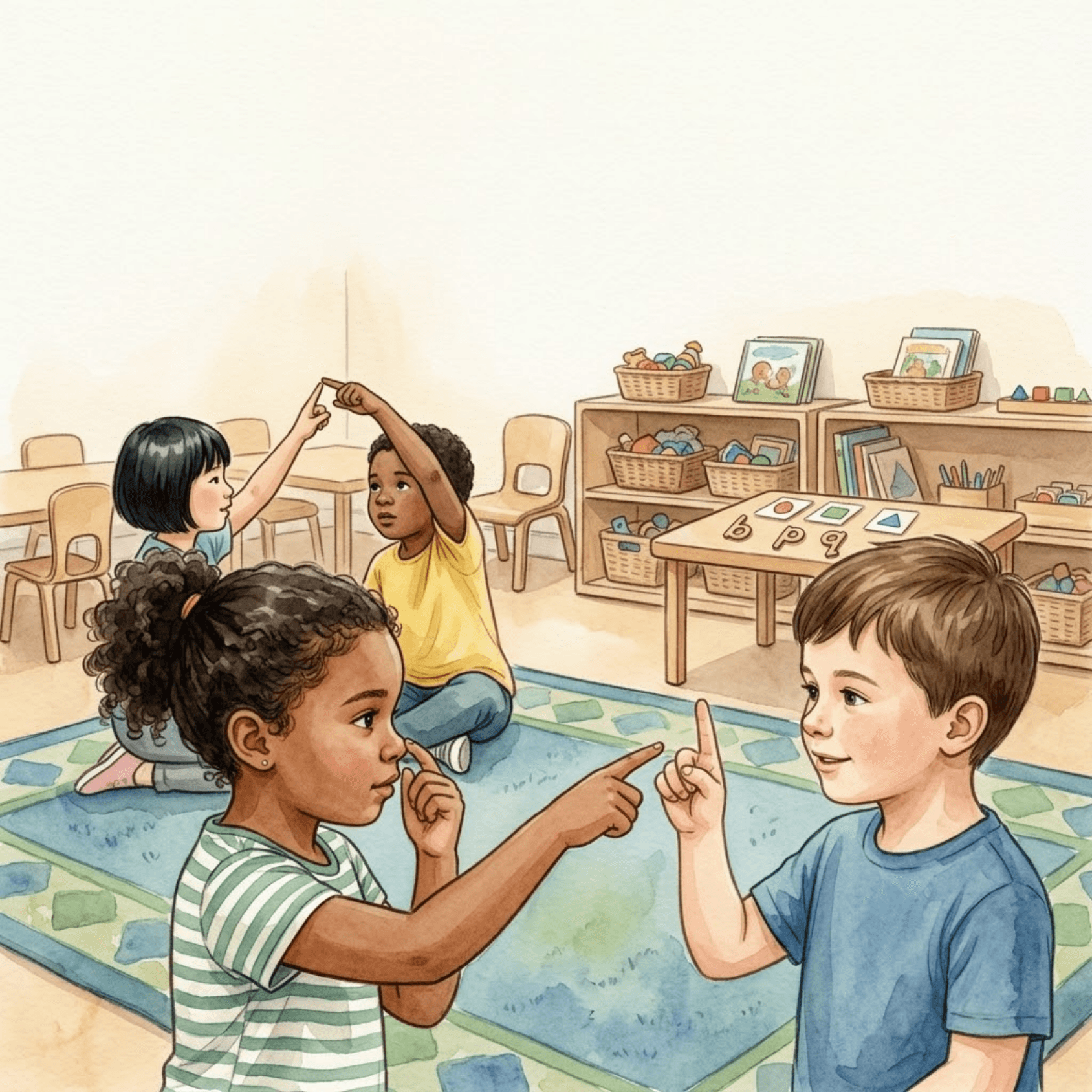
Try nose to partner finger
Children gently touch their own nose, then reach to touch a partner's finger.
Move the finger slightly higher, lower, to the left or to the right. Keep it close enough for success before gradually making the spatial judgement more challenging.
6. The child who seems to tire before everyone else
This is another pattern I do not want us to dismiss too quickly.
It might be the child who asks to be carried on a walk, avoids climbing, constantly looks for somewhere to sit, or seems exhausted by activities the rest of the group manages comfortably.
There can be many reasons for fatigue, and educators are not there to diagnose them.
But if the same child repeatedly seems to find physical participation unusually demanding, it is worth documenting what you are seeing and discussing it with the family and appropriate professionals where needed.
7. The child who always finds a way to make movement easier
Children are incredibly good at finding efficient ways to complete a task.
They might lean against the wall during a standing activity, use both hands to push themselves up, sit rather than squat, avoid one side of the body or position themselves so they have a much wider base of support.
Sometimes that is simply a child being a child.
But when the same compensations appear repeatedly, I become interested in what happens when we gently vary the task.
Notice first. Then give the body more opportunities.
I do not want classrooms turning into assessment clinics.
Teachers already have enough to do.
What I do want is for educators to feel confident noticing movement.
Give children opportunities to crawl, kneel, reach, rotate, climb, push, pull, balance, carry, get up and down from the floor and use their bodies in lots of different positions.
You do not need to constantly correct the child's body.
Sometimes the most useful thing we can do is create more opportunities for that body to develop options.